
Nutrition
Diet Charts for Kerala Kitchens: A Guide for Dietitians in Kochi
For dietitians in Kochi: writing diet charts around matta rice, fish curry and coconut, a sample Kerala day, and the software that keeps every client on track.
A diet chart that works in Delhi will usually fail in Kochi. Not because the advice is wrong, but because it doesn't look like a Kerala day. A good chart for a Kochi client starts from what's already on their plate and changes only what has to change.
This guide covers the local habits a chart has to work around, a sample day in the standard meal-slot format, and how dietitians in the city are running their practices.
What a Kerala plate brings to the chart
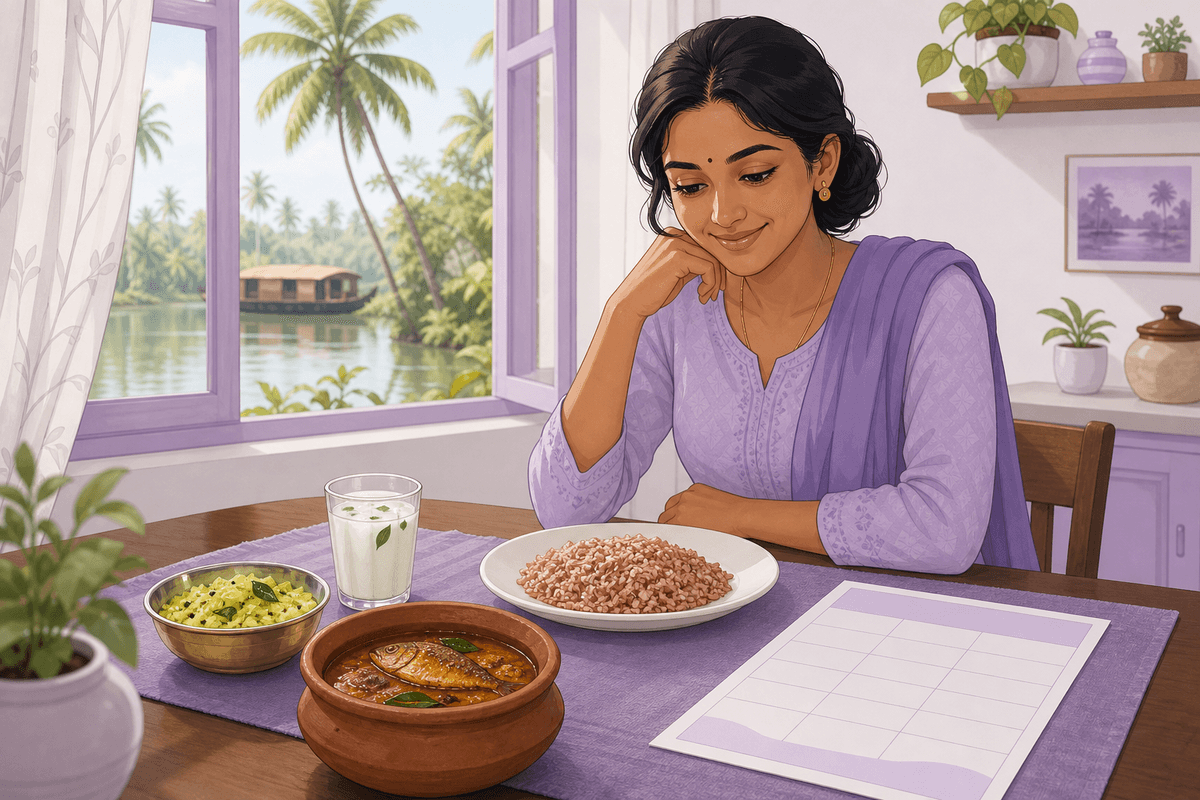
Rice is the centre, and it's usually matta. Many households eat Kerala red (matta) rice twice a day, often in generous helpings with a small amount of curry. Telling a client to "cut rice" rarely lasts. Writing a specific portion ("1 cup matta rice, half the plate vegetables") usually does.
Coconut is in almost everything. Grated coconut in thoran, coconut milk in stew and curries, and coconut oil for cooking. A chart that ignores coconut won't be followed. A chart that says where it goes, and how much, has a chance.
Fish is a staple, and how it's cooked matters. Meen curry in a clay pot is a very different meal from meen fry. Many Kochi dietitians write the cooking style into the chart, not just the food.
Breakfast is its own cuisine. Puttu and kadala, appam and stew, idiyappam, dosa. These are part of the family routine, so swapping them for oats is a hard sell. Adjusting the portion and the side dish usually works better.
Tea time is a trap. Evening tea comes with pazham pori, banana chips or bakery snacks. For many clients the evening snack slot is where the most change needs to happen.
A sample Kochi day
Here is the format filled in for an example client. It's an illustration of the layout, not a recommendation. Every plan depends on your own assessment.
| Meal | What to have |
|---|---|
| Early morning | 1 glass warm water · black tea without sugar |
| Breakfast | 2 small puttu pieces · 1 katori kadala curry |
| Mid-morning | 1 small nendran banana or 1 guava |
| Lunch | 1 cup matta rice · fish curry (1 piece) · cabbage thoran · moru |
| Evening snack | Tea without sugar · 1 handful roasted chana |
| Dinner | 2 chapati or 2 idiyappam · vegetable stew |
Guidance: fish curry rather than fry on most days. Coconut oil measured with a spoon, not poured. Dinner before 8:30 pm.
For the reasoning behind the format, see our diet chart format guide.
Running a nutrition practice in Kochi
Kochi's dietitians tend to work in three ways, often all at once:
- Solo consultants with a small clinic, seeing clients in the morning and evening around family and hospital commitments.
- Clinic- or hospital-attached dietitians who also keep private clients.
- Online clients across the Gulf and beyond. Kerala's large overseas community means many clients consult on video and never come in person.
That last group changes how the chart reaches the client. A printout isn't much use to a client in Dubai. A chart that opens on their phone from a WhatsApp link is. (We compare the options in how to share a diet plan on WhatsApp.)
Keeping it together
Whatever the mix, the hard part is the same: keeping each client's assessment, charts and progress in one place across months of follow-ups.
Nimo's dietitian software is built for that. You write the diet plan meal by meal in the visit note, in your own words, whether that's "1 cup matta rice" or "2 puttu pieces". The client gets a phone link (no app, no login) and an A4 printout, and every chart stays in their timeline. Your clinic gets a free online booking page so clients can book the next check-in themselves. Nimo doesn't calculate calories or macros; the plan is yours.
If you practise in Kochi or anywhere in Kerala, see Nimo for nutritionists, or start free and write your first chart today.