
How to start an Ayurveda clinic: the Nimo playbook
A calm OPD, a warm therapy room, and oil that never runs out.
- Typical space
- 200 sq ft OPD; 500+ with Panchakarma
- Time to open
- 8–14 weeks
- Registers with
- State Ayurveda / ISM board
12 chapters · about 16 min read · updated
The 60-second version
- Decide early: OPD only, or OPD with Panchakarma. It is the single choice that sets your space, staff, budget and paperwork. Many vaidyas start with an OPD and add one therapy room in year one or two.
- Get registered before anything else. Your registration with the state board or council for Indian systems of medicine (under the NCISM framework), then whatever your state and local body ask of a clinic. Rules differ by state, so confirm locally.
- Panchakarma is a hospitality business as much as a clinical one. Hot water, clean linen, privacy, trained therapists of the right gender and a warm, unhurried room decide whether patients finish a course.
- Stock a focused dispensary. Start with the classical and proprietary formulations you actually prescribe, from reliable manufacturers, and grow it from your own prescribing.
- Price consults and therapies separately. Therapy courses (7, 14 or 21 days) are where planning and packaging matter.
- Your first patients come through trust. Neighbours, referral doctors, talks on seasonal routines (ritucharya) and a simple booking link work better than discounts, within your council's advertising norms.
Before you sign a lease
Who lives nearby? Ayurveda patients are often adults with long-standing joint, back, digestive or skin complaints, people wanting a Panchakarma course before a season change, and older patients who come for years. A settled residential area usually serves you better than a busy commercial strip.
Access matters more than visibility. Panchakarma patients come daily for a week or more, often drowsy after therapy. Ground floor or a lift, and an auto stand or parking nearby, all help.
OPD only vs. OPD with Panchakarma.
| Set-up | Space | What it needs |
|---|---|---|
| OPD only | 150–250 sq ft | A consulting room, a small dispensary corner and a waiting area for four to six people. |
| OPD plus one therapy room | 400–600 sq ft | Add a therapy room (around 100–150 sq ft) with an attached bath, a small preparation area for heating oils and decoctions, and storage for linen. |
| OPD plus male and female therapy rooms | 600–900 sq ft | Two therapy rooms with separate baths, so that you can treat men and women at the same time with therapists of the same gender. |
Water, drainage and ventilation. A therapy room needs a reliable hot-water supply, a floor that drains (oil on tiles is a slip hazard), good exhaust for steam and the smell of warm oils, and a washroom that is cleaned between every patient. Ask the landlord about water pressure, the geyser load on the electricity connection and whether you can install a drain before you sign. These are hard to fix later.
Rent vs. a home clinic. A home OPD with a separate entrance is a respectable start. A home Panchakarma room is harder: oil, steam and daily foot traffic test your family and neighbours. Check that your society or local body permits a clinic first.
Neighbourhood fit. A physiotherapist or GP down the road can become a steady source of referrals. A large wellness brand on the same road is a harder start.
Paperwork and registrations
What follows is a list of what to ask about, not legal advice. Rules differ by state, and sometimes by city, so confirm each item with your state board or council and your local body. The cluster post on clinic registrations and licences in India goes deeper.
| What | Who issues it | When |
|---|---|---|
| Registration as an Ayurvedic practitioner | Your state board or council for Indian systems of medicine (under the National Commission for Indian System of Medicine framework) | Before your first patient. Display the certificate. |
| Clinical establishment registration | Your state or district registering authority, where the state has adopted the Clinical Establishments (Registration and Regulation) Act 2010 or has its own law | Before opening. Many states have adopted the central Act; not all have. Ask whether a Panchakarma unit changes your category. |
| Shops & Establishment registration or trade licence | Your municipal corporation, panchayat or local body | Before opening, usually within a fixed window of starting. |
| Bio-medical waste arrangement | Tie-up with a Common Bio-medical Waste Treatment Facility, under the Bio-Medical Waste Management Rules 2016; authorisation from the state pollution control board where required | Before opening, if you generate bio-medical waste. Oil-soaked cotton and gauze, any sharps and any procedure involving blood should be discussed with them. |
| Drug licence, if you sell or manufacture | Your state's licensing authority for Ayurvedic, Siddha and Unani drugs | Before you run a retail counter or prepare medicines in-house beyond dispensing to your own patients. Ask what applies in your state. |
| Fire NOC | Local fire department | Only if your premises cross your state's thresholds. Therapy rooms with heaters, steam units and stored oils are a good reason to ask even if you are small. |
| Labour and staff registrations | Your state labour department | Once you employ therapists and helpers, ask what applies for your staff count. |
| GST | Not usually needed for consultations | Healthcare services by clinical establishments are generally GST-exempt. Whether a wellness-only massage or a sale of medicines is treated differently is a question for a CA. |
Signboards and the word "wellness". Your council's code of ethics sets what can go on a signboard, letterhead and visiting card. Be careful with disease claims, "detox" promises and before-and-after photos.
Nimo tip: Keep one file, paper or digital, with every certificate, its number and its renewal date, plus your waste-collection receipts. Inspectors, landlords and insurers all ask for the same five papers.
Setting up the room
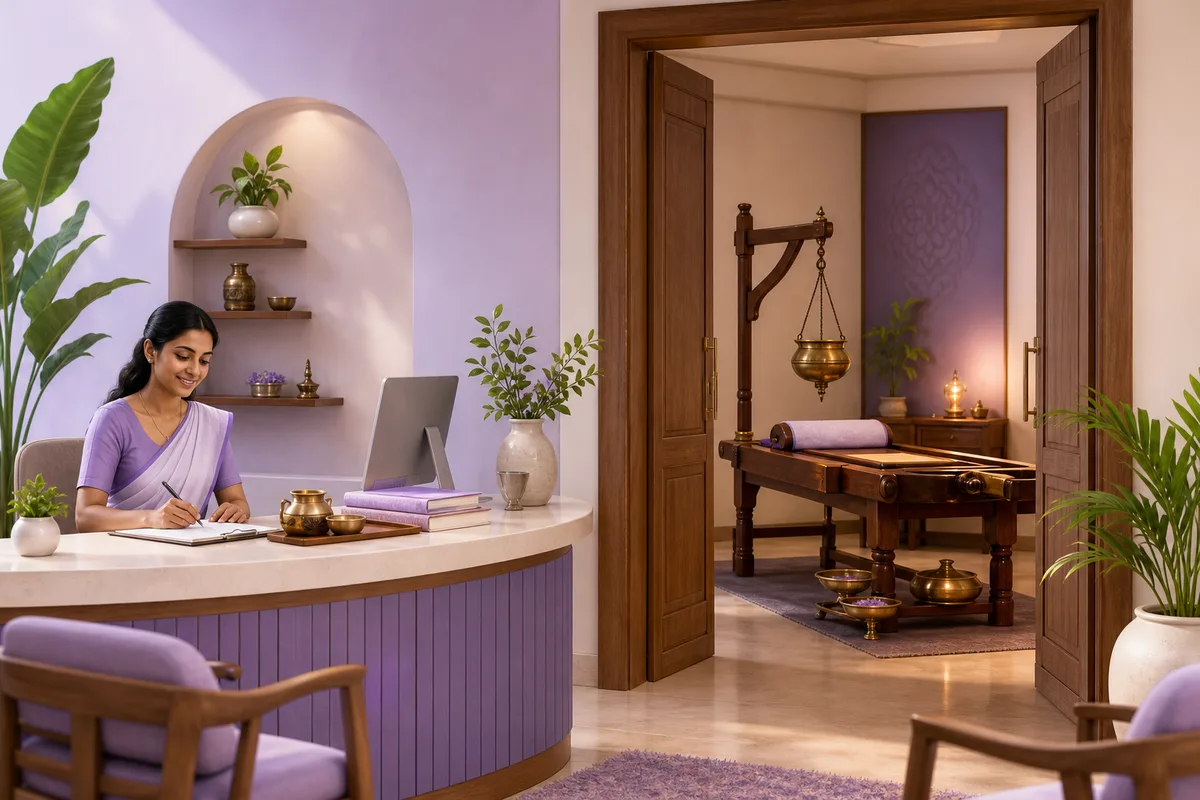
Costs below are rough ranges and vary a lot by city, by wood and finish, and by whether you buy new or second-hand.
The OPD
| Item | Must-have / Nice-to-have | Rough cost |
|---|---|---|
| Consulting desk and two or three chairs | Must-have | ₹10,000–₹30,000 |
| Examination couch with a step | Must-have | ₹5,000–₹15,000 |
| BP apparatus, stethoscope, thermometer, torch, weighing scale, measuring tape | Must-have | ₹5,000–₹15,000 |
| Medicine racks or cabinet for churnas, tablets, arishtas and oils | Must-have | ₹15,000–₹50,000 |
| Dispensing counter, measuring cups, labels, small bottles and pouches | Must-have | ₹5,000–₹15,000 to start |
| Reference texts (Samhitas, formularies) | Must-have | ₹5,000–₹20,000 |
| Printer for prescriptions and diet charts | Nice-to-have | ₹6,000–₹15,000 |
The Panchakarma room (if you have one)
| Item | Must-have / Nice-to-have | Rough cost |
|---|---|---|
| Droni (therapy table), in seasoned wood or a fibre alternative, with an oil-collection channel | Must-have | ₹20,000–₹80,000 |
| Steam chamber or swedana box, or a nadi swedana unit | Must-have | ₹15,000–₹60,000 |
| Shirodhara stand with dhara vessel | Must-have, if you offer shirodhara | ₹8,000–₹40,000 |
| Induction or gas burner, vessels and double boilers for warming oils and preparing kashaya | Must-have | ₹5,000–₹15,000 |
| Attached bath with a geyser and anti-slip flooring | Must-have | Varies widely with the premises |
| Linen: towels, sheets, disposable undergarments, plus a washing arrangement | Must-have | ₹5,000–₹15,000 to start, then a running cost |
| Lockable storage for oils, ghee and herbs, away from heat and pests | Must-have | ₹5,000–₹20,000 |
| Exhaust fan and good ventilation | Must-have | ₹3,000–₹10,000 |
| Basti and nasya kit, as your practice requires | Nice-to-have | ₹3,000–₹10,000 |
| Soft lighting and a quiet music player | Nice-to-have | ₹2,000–₹5,000 |
Oil on the floor is the most common accident: plan anti-slip mats and a mop by the door. Make it impossible for anyone to walk into a therapy room by accident.
Stocking your dispensary and therapy room
Start from your own prescribing. Think back to your internship and practice years. Which churnas, kashayas, vatis and gulikas, asavas and arishtas, ghritas and tailas did you reach for most? Begin with those, from manufacturers whose quality you trust, and add slowly.
A rough first order. For a solo OPD, an opening stock in the range of ₹40,000–₹1,50,000 is common, and Panchakarma oils and consumables add to that (rough ranges that vary a lot with how widely you prescribe). Oils and ghritas for therapy are a running cost that grows with every patient, so price your therapies with that in mind.
Watch shelf life. Churnas absorb moisture, oils go rancid in heat, and pests love herbs. Keep stock dry, cool and sealed, and date every bulk container you open.
In-house preparation. If you plan to prepare oils or kashayas beyond your own patients' needs, ask your state licensing authority first.
Organise for the hand.
- Group stock by dosage form, then alphabetically, and keep the same order on every shelf.
- Keep a "running low" list at the counter and reorder weekly.
- Label every dispensed item with the patient's name, the dose and the anupana in plain words. "Take with warm water after food" is clearer than an abbreviation.
Decide how you charge for medicine. Some vaidyas include a week or two of medicine in the consultation fee; most charge separately at MRP. Either works, as long as the fee card says which.
Nimo tip: After your first month, list your 20 most-prescribed formulations and your 20 least. The first list is what must never run out; the second is what not to reorder.
How a consult flows
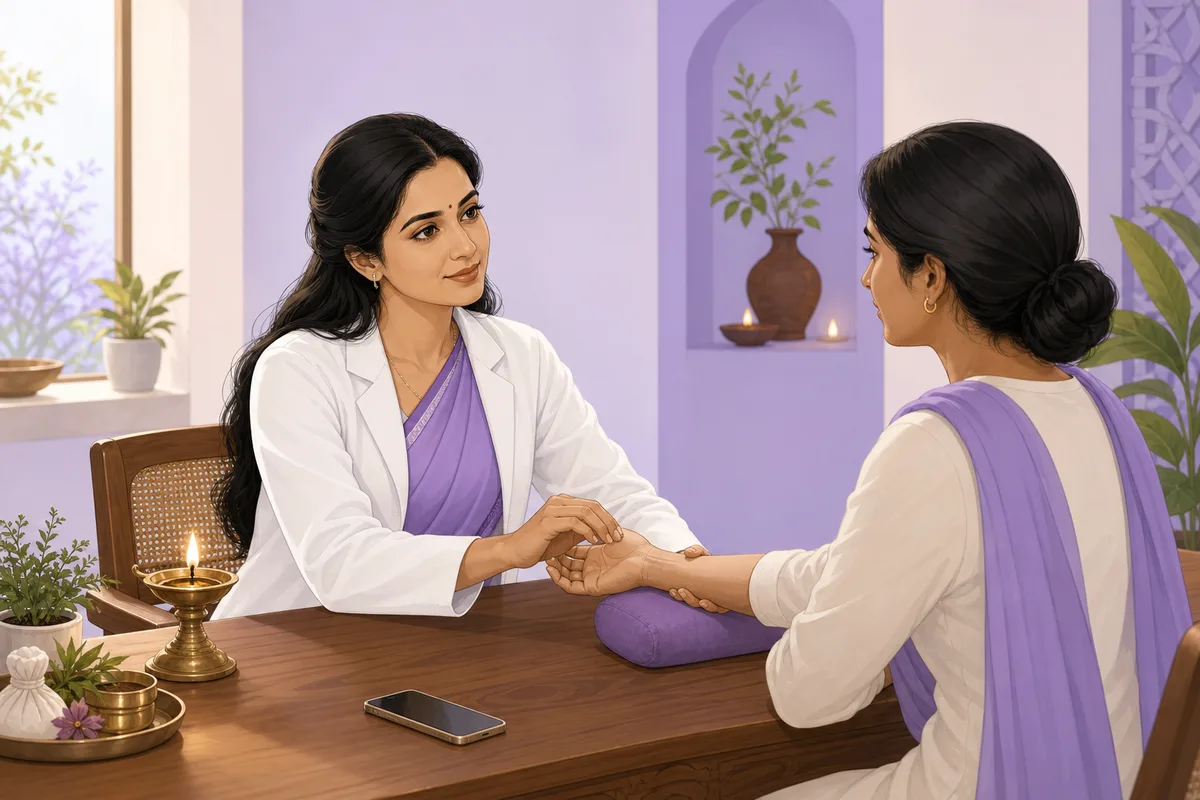
The first visit (30–45 minutes).
- Front desk (5 minutes). Name, age, mobile number, the main complaint in the patient's words, and any reports they have brought.
- History and assessment (20–30 minutes). The complaint and its story, ahara (diet), vihara (routine and sleep), agni and koshta, prakriti and vikriti, nadi pariksha and the rest of your examination, past and family history.
- Plan (5–10 minutes). Formulations, dose and anupana, pathya–apathya (what to eat and avoid), lifestyle advice, and whether a therapy course is recommended now or later.
- Handoff (5 minutes). The front desk collects the fee, dispenses medicines, hands over the written diet and routine advice, and books the follow-up or therapy days before the patient leaves.
The follow-up (10–15 minutes). How has the complaint moved? Appetite, digestion, sleep? Could they follow the pathya? Adjust and book the next visit.
A Panchakarma course. For a course, plan each day properly:
- Before the course: a consult to decide the procedures and their order, plus clear instructions on diet and what to bring.
- Each session (45–90 minutes): a quick check-in, the therapy, rest, bath and a few minutes before leaving.
- After the course: a review visit to discuss what comes next.
Book every session at the start of the course, not day by day, and give therapists a short written plan for each patient so that nothing depends on memory.
Pricing your consult
There is no single "right" fee, and your council may have guidance on what you can say about fees publicly. A few principles:
- Know the local norm, then decide where you sit.
- Price consultations, medicines and therapies separately, and write them on one clear fee card.
- Build therapy prices from real costs: oils and herbs, linen and laundry, therapist time, hot water and electricity, and your room's share of rent.
As rough ranges that vary a lot by city:
| Service | Common range |
|---|---|
| First consultation | ₹300–₹1,000 |
| Follow-up | ₹200–₹600 |
| A single Panchakarma or Keraliya therapy session (for example abhyanga with swedana, or shirodhara) | ₹1,000–₹4,000 |
| A 7, 14 or 21-day course | Usually priced as a package, below the sum of single sessions |
Packages. Write down exactly what is included (procedures, days, consultations, medicines) and avoid wording that sounds like a promised result.
Your first 50 patients
Ayurveda grows through trust and word of mouth. Keep everything within your council's advertising-ethics norms.
- Start with people who already know you. Your first patients are usually someone's relative.
- Set up a Google Business Profile with correct timings, a phone number that someone answers and honest photos of the OPD and therapy room. Ask satisfied patients whether they would leave a review; never offer anything in exchange.
- Make booking easy. A booking link or a free clinic page you can share on WhatsApp lets a son book his father's follow-up at night without calling.
- Talk about the seasons. A short talk on ritucharya before monsoon or winter, at a residents' association or a yoga class, is useful and very Ayurvedic.
- Get to know nearby doctors. GPs, physiotherapists and orthopaedic surgeons should know whom to call when a patient asks about Ayurveda.
- Camps, carefully. Check with your council what you may offer free and how you may publicise it.
- Book the next visit every time. Fifty patients who return regularly make a busier clinic than two hundred who come once.
The post on finding your first patients has more on doing this ethically.
Records, notes and software
Paper works, for a while, and patients like seeing you write. The cracks show later: a returning patient whose prakriti assessment you cannot find, a therapist who is not sure which oil you chose on day three, a course booked on three different scraps of paper. If you start on paper, use one consistent case sheet layout, and a printed diet chart for pathya–apathya advice so that every patient leaves with the same clarity.
Digital helps most with continuity: every visit, prescription and therapy session in one timeline, so the follow-up starts from where you left off.
That is the work Nimo does for a small Ayurveda clinic:
- Prescriptions the Ayurvedic way. When you sign up for Ayurveda, the prescription form uses Formulation and Dose fields instead of brand and milligram strength, so churnas, kashayas, vatis and asavas feel natural. Record anupana with each formulation, add pathya–apathya advice to the note and the printed prescription, and save your common protocols as templates.
- One record per patient. History, vitals, visit notes and prescriptions sit together, searchable from your phone. Receptionists can book appointments and check patients in, but never see clinical notes.
- Booking for consults and therapy days. Book therapy sessions as appointments in the clinic calendar, share a booking link on WhatsApp for follow-ups, put the walk-in QR poster in your waiting room, and get a free clinic website and booking page at gonimo.in/your-clinic-name.
- On Pro, auto visit notes. Nimo listens to the consultation and drafts a structured note covering assessment, advice and plan, which you review and finalise.
The Free plan is ₹0 for one doctor and up to 100 visits a month, with the booking link, walk-in QR, manual notes and prescriptions, and Google Calendar sync. One honest note: if you book every therapy session as a visit, a busy Panchakarma month can reach 100 quickly. Pro is ₹999 a month or ₹9,999 a year, for up to five doctors, unlimited visits and auto visit notes. You can start free as an Ayurveda practitioner or look around first.
Nimo tip: Write the pathya–apathya as three or four short, concrete lines ("warm water through the day", "no curd at night") rather than a long list. Patients follow what they can remember.
Opening-day checklist
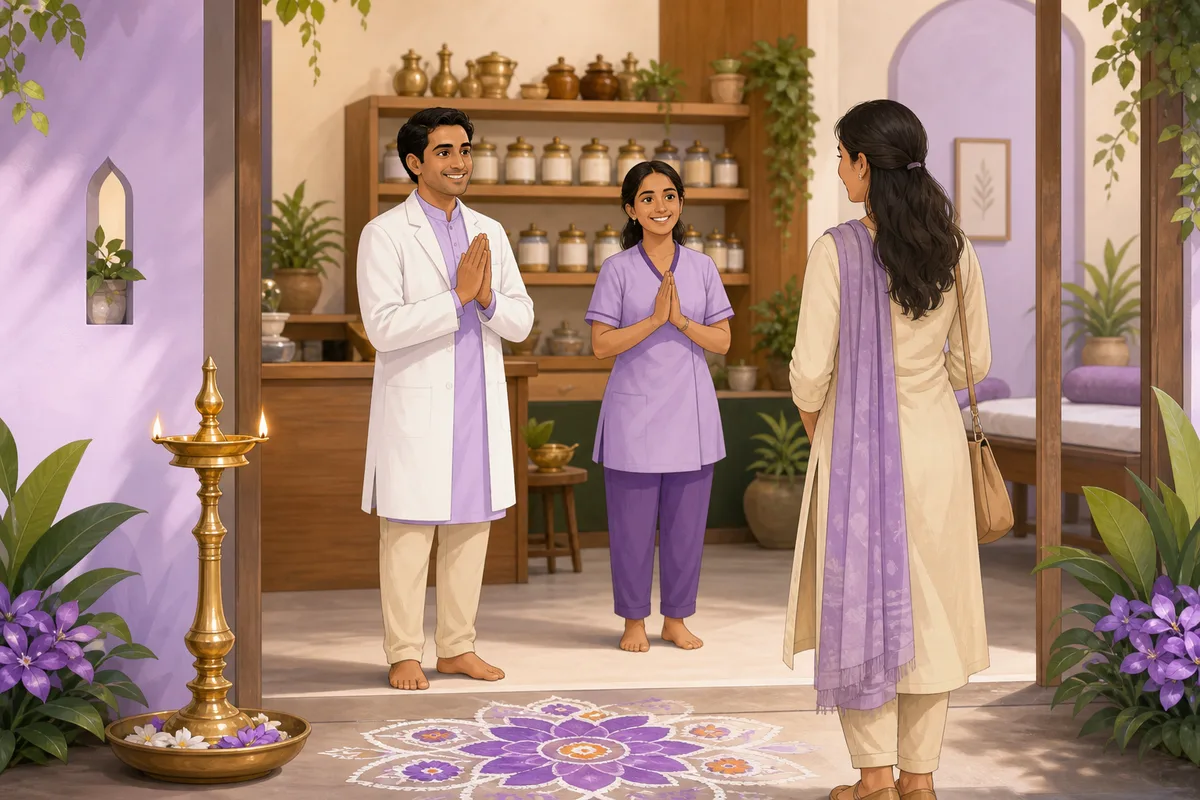
- Registration certificate from your state board or council displayed in the consulting room
- Clinical establishment registration and local body licence done, or applications filed, as your state requires
- Bio-medical waste tie-up in place, with colour-coded bins in the OPD and therapy room
- Signboard and any wellness wording checked against your council's code of ethics
- Opening stock arranged, labelled and dated
- Therapy oils, ghee and kashaya ingredients for the first two weeks in stock
- Droni, steam unit and dhara stand tested, with someone lying on the droni
- Hot water tested at the time of your first session
- Anti-slip mats in the therapy room and bath
- Clean linen for at least three days of sessions, and a laundry plan
- Therapists briefed on consent, privacy and same-gender treatment
- Case sheets printed or software set up, with a test patient entered and deleted
- Fee card ready: consultation, follow-up, single therapies and course packages
- Receipt book or receipt printing tested; UPI QR code at the desk
- Google Business Profile live with correct timings
- Booking link or clinic page tested on your own phone
- First-aid box, drinking water and warm water for patients after therapy
Things nobody tells you
Panchakarma patients remember the room before the treatment. A cold floor, a lukewarm bath or a stained towel will be mentioned to friends long before the results are.
- Your therapists are your clinic. Patients spend an hour with them and fifteen minutes with you. Hire for kindness and reliability, train them well, pay them on time, and treat a good therapist leaving as the real risk it is.
- Oil is the most expensive thing nobody counts. Measure what each therapy actually uses for the first month. Most new centres find they underpriced at least one procedure.
- The laundry decides your hours. Linen for six sessions a day is a lot of washing and drying, especially in the monsoon. Plan it before you plan the brochure.
- Patients will ask about "detox" and weight loss. Explain what a course involves and what you will watch for. Do not promise numbers. It protects them and it protects you.
- Pathya is the hardest prescription to fill. Patients will take the tablets and quietly ignore the diet. Ask about it at every follow-up, without judgement, and you will learn what is actually possible in their kitchen.
- Keep a casebook. Each month, write a page on one patient who surprised you. In three years it will be the most useful book in your clinic.
Where to go next
- Ayurveda on Nimo: how Nimo handles formulations, anupana and pathya–apathya.
- All starting-a-clinic resources: the full hub of playbooks, guides and free tools.
- Clinic setup cost in India: budgeting the first year, line by line.
- Your first 90 days in a new clinic: what to expect once the doors open.
- Free diet chart maker: print clear pathya–apathya and diet advice for patients.
- AYUSH on Nimo: how Nimo works across Ayurveda, homeopathy, Unani and Siddha.
10 more chapters are waiting
Paperwork, the room, pricing, your first 50 patients, an opening-day checklist and the things nobody tells you. Tell us a little about you and Nimo opens them all.
General guidance, not legal or medical advice — rules differ by state, so confirm with your council and local body. More for new clinics in Resources.