

How to start a naturopathy and yoga centre: the Nimo playbook
Mud, water, breath and patience. A calm guide to your own centre.
- Typical space
- 600–1,500 sq ft
- Time to open
- 2–4 months
- Registers with
- State naturopathy / AYUSH board
12 chapters · about 15 min read · updated
The 60-second version
- A naturopathy and yoga centre is really three spaces in one: a consult room, therapy rooms that get wet and warm, and a calm hall for yoga. Plan the plumbing before the paint.
- Your patients come for weeks, not minutes. Most of your income and most of your results come from therapy packages and follow-ups, not the first consult.
- Registration depends heavily on your state. Some states have a dedicated naturopathy and yoga board, others route BNYS graduates through a wider AYUSH or Indian-medicine board. Ask early.
- Hydrotherapy and mud therapy need water, drainage, hot water, ventilation and privacy. Budget for these properly; they're what patients remember.
- Staff your therapy rooms so that women patients can be treated by women therapists. This shapes your hiring from day one.
- Your first 50 patients come from trust: a free yoga session, a talk on diet and lifestyle, referring doctors who know what you do, and a booking link that works.
- Keep a written plan for every patient: therapies, diet regimen and yoga protocol, reviewed visit over visit. That plan is your treatment.
Before you sign a lease
Day centre, not a residential nature cure hospital. This playbook is about an outpatient centre where patients come for a consult, a course of therapies and yoga, and go home the same day. Residential nature cure (with stays, kitchens and wards) is a very different business, with different licences and staffing.
Space. Rough shapes that work:
- Starter (600–900 sq ft): a consult room, one or two therapy rooms with a shared wet area, a changing room with a toilet and shower, and a small yoga room for 8–12 people.
- Comfortable (1,000–1,500 sq ft): separate therapy rooms for men and women, a dedicated hydrotherapy area, a proper yoga hall for 15–25, a small reception and a quiet waiting corner.
Ground floor, if you can. Hip-bath tubs, steam cabinets and mud storage are heavy and wet. Water on an upper floor is a conversation with your landlord and the flat below. Ask about water supply, drainage capacity, and whether you can install a geyser or heat-pump in each wet room.
Neighbourhood fit. Naturopathy and yoga do well near residential areas where people can come before work or after, and where older patients can walk in. Morning yoga batches start early (5:30–7 am), so check building access and whether the watchman opens the gate before sunrise. Parking matters for patients who come for a 10-day course.
Rent vs. own premises. Wet rooms are expensive to build and expensive to leave. Try for a longer lease (with a lock-in you can live with) or premises you own. A short lease on a space you've tiled and plumbed is the classic way to lose your setup money.
Nimo tip: Before you sign, run the tap in the room you'd use for hydrotherapy for ten minutes. Watch how fast it drains, check the water pressure on the top floor, and ask the neighbours when the water tanker comes. A dry tap at 11 am on a full therapy day is the nightmare you can avoid.
Paperwork and registrations
Naturopathy sits under the AYUSH umbrella, but the registration route is less uniform than for Ayurveda or Homoeopathy, which have national commissions. Rules differ by state. Confirm with your state's AYUSH department or naturopathy board, your local body and a CA before you open. Treat the table below as a list of things to ask about, not legal advice.
| What | Who issues it | When |
|---|---|---|
| Practitioner registration (BNYS or recognised qualification) | Your state's board of naturopathy and yoga, or the AYUSH / Indian-medicine board that registers naturopaths in your state | Before you see your first patient |
| Yoga professional certification (for yoga staff) | Yoga Certification Board, Ministry of AYUSH, or other recognised certifications | Before staff start teaching; check what your state or insurer expects |
| Clinical establishment registration | Your district registering authority, in states that have adopted the Clinical Establishments (Registration and Regulation) Act, 2010 or their own act | Ask early; it can need floor plans, staff lists and photographs |
| Shops & Establishment registration or trade licence | Your municipal corporation or local body | Before opening day, once you have the rental agreement |
| Fire NOC | Local fire department | Thresholds vary by state, area and building height; ask whether you need one |
| Bio-medical waste authorisation and tie-up | State Pollution Control Board; a Common Bio-medical Waste Treatment Facility | Ask whether your centre generates bio-medical waste (for example if you do acupuncture or enema therapy with disposables) under the Bio-Medical Waste Management Rules, 2016 |
| GST question | GST department, via your CA | Healthcare services by clinical establishments are generally exempt, but standalone yoga classes or product sales may be treated differently. Ask your CA |
| Signboard and advertising | Your state board's ethics code | Before you print anything |
Two notes worth underlining:
- Claims. Advertising that your centre cures specific diseases can run into the Drugs and Magic Remedies (Objectionable Advertisements) Act, 1954 and your board's ethics code. Talk about what you offer, not what it will cure.
- Your therapists. If you employ therapy assistants who aren't registered practitioners, be clear in writing about what they do under your supervision.
Setting up the room
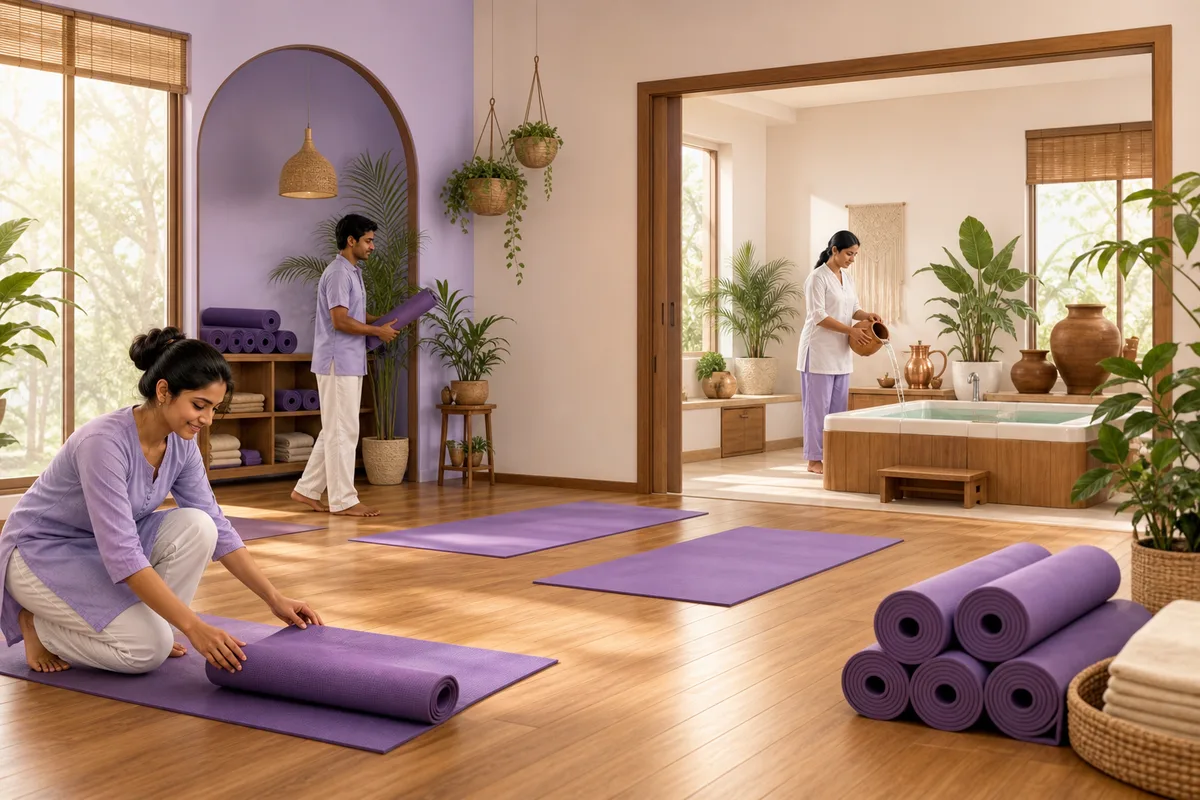
Rough ranges, which vary a lot by city, brand and how much civil work you do:
| Item | Must-have / Nice-to-have | Rough cost |
|---|---|---|
| Consult room: desk, chairs, examination couch, BP monitor, weighing scale, measuring tape | Must-have | ₹25,000–₹60,000 |
| Massage tables (wooden or padded), one per therapy room | Must-have | ₹8,000–₹30,000 each |
| Hip-bath tub(s) | Must-have | ₹5,000–₹20,000 each |
| Arm and foot bath set | Must-have | ₹3,000–₹10,000 |
| Steam cabinet (full-body) | Must-have | ₹25,000–₹80,000 |
| Geysers or heat-pump for wet rooms | Must-have | ₹10,000–₹60,000 |
| Mud therapy setup: clean mud storage bins, sieves, trays, mud-pack cloths | Must-have | ₹3,000–₹15,000 |
| Linen, towels, gowns, sheets (several days' worth) | Must-have | ₹15,000–₹40,000 |
| Yoga mats, blocks, straps, bolsters, a few chairs for chair yoga | Must-have | ₹10,000–₹40,000 |
| Waterproof flooring, anti-skid tiles, grab rails in wet rooms | Must-have | Varies a lot with civil work |
| Spinal bath tub | Nice-to-have | ₹8,000–₹25,000 |
| Infrared or local steam unit | Nice-to-have | ₹5,000–₹30,000 |
| Acupressure tools, magnetotherapy or chromotherapy kits | Nice-to-have | ₹2,000–₹20,000 |
| Washing machine and dryer for linen | Nice-to-have (soon a must) | ₹25,000–₹70,000 |
| Sound system and soft lighting for the yoga hall | Nice-to-have | ₹5,000–₹25,000 |
Therapy rooms
Therapy rooms are where a naturopathy centre is won or lost. Patients forgive a plain reception. They don't forgive a cold, slippery, crowded bathroom.
Separate by gender, and staff accordingly. If space allows, have separate therapy rooms (or at least separate time slots) for men and women, with women therapists for women patients. Many patients will ask about this on the phone before they book. A clear answer brings them in.
Wet zone and dry zone. Keep hydrotherapy (hip bath, spinal bath, steam, enema) in a tiled wet area with a floor slope towards the drain, anti-skid tiles and grab rails. Keep massage, mud packs and acupressure in a warmer, dry room. Walking a patient in a wet towel through the yoga hall is a mistake you only make once.
Hot water on demand. A full therapy morning uses a lot of hot water. Size the geyser for back-to-back sessions, not one bath. Check it on the coldest day of the year.
Ventilation. Steam rooms need an exhaust. Mud rooms need fresh air and a place for mud to dry. Small rooms with no window become very unpleasant by 11 am.
Mud therapy logistics. Source clean mud from a reliable supplier, sieve and store it in covered bins, and never reuse mud between patients. Write down where it came from and when.
Changing and privacy. A changing area with hooks, a mirror, a lockable cupboard for valuables and a shower. Give patients a gown and a clean towel every visit. These small courtesies matter more than the brand of steam cabinet.
Yoga hall. A calm, ventilated room with a clean floor, enough space for a mat plus an arm's length each side, and no therapy noise bleeding in. If the same room doubles for diet talks, keep a folding screen and a few chairs.
A therapy timetable. Write your daily grid on day one: which therapies run in which room, how long each takes including cleaning, and which therapist is on. A room that's double-booked at 9 am will spoil a patient's whole course.
Nimo tip: Add 10 minutes of turnover between every wet therapy for cleaning, refilling and a dry towel. It feels like lost time on paper. In practice, it's the difference between calm and chaos by noon.
How a consult flows

First visit (45–60 minutes, plus therapies if started the same day)
- Front desk (5 minutes). Name, mobile, age, the reason for coming, and any reports or prescriptions from other doctors. A walk-in QR in the waiting area saves the clipboard.
- Consult (30–45 minutes). History, lifestyle, diet, sleep, bowel habits, stress, activity, current medicines (as reported by the patient), examination and vitals. Then a plan: which therapies, how often, for how long, the diet regimen, and the yoga protocol.
- Explain the course. Patients need to know what each therapy feels like, what to wear, whether to come on an empty stomach, and how many days the course runs. Write it down.
- Front desk handoff (5–10 minutes). Book the therapy slots for the whole course, collect payment or the package fee, and give the timetable in writing.
Therapy visits (45–120 minutes)
A patient on a course might come daily for 7, 10, 14 or 21 days. A typical morning could be: a hip bath, a mud pack, a massage, a short rest, and a yoga session. The therapist notes what was done and anything they noticed.
Review visits (15–20 minutes)
At the end of each week or course, sit with the patient: what's changed, what's been hard, what to continue at home. Adjust the diet regimen and yoga protocol, and plan the next review.
If a patient is on medicines from another doctor, they continue them unless that doctor says otherwise. Writing that clearly in your plan protects the patient and you.
Pricing your consult
Pricing in a naturopathy centre has three layers: the consult, the therapies and the yoga. Some rough ranges, which vary a lot by city and setup:
| Offer | Rough range |
|---|---|
| First consult | ₹300–₹1,000 |
| Follow-up or review consult | ₹200–₹600 |
| Single therapy session (hip bath, mud pack, steam) | ₹200–₹800 |
| Massage or combined therapy session | ₹500–₹2,000 |
| 7–10 day therapy package | ₹3,000–₹15,000 |
| 21-day therapy package | ₹8,000–₹35,000 |
| Monthly yoga batch (group) | ₹1,000–₹3,500 |
| Personal yoga therapy session | ₹500–₹2,000 |
Some ways to think about it:
- Packages fit the work. Naturopathy happens over courses. A package price that includes the consult, therapies and one review is easier for patients to say yes to than a long per-item bill.
- Yoga brings people in; therapies keep the lights on. Many centres keep group yoga affordable as a front door, and price personalised therapy packages to reflect staff time, water, power and linen.
- Be clear about what's included. Gowns, towels, oil, diet guidance between visits, and what happens if a patient misses a day.
- Never sell a cure. Talk about the course and what it involves, not guaranteed results.
Your first 50 patients
- A free community yoga morning. One Sunday a month in a park or a residents' association hall. People meet you, see how you teach, and ask about the centre on their own.
- Talks on daily habits. Sleep, diet, desk posture, stress. Offices, schools, senior citizens' forums and temples often welcome a 30-minute talk. Keep it practical and never claim cures.
- Referring doctors. Visit the GPs, physiotherapists, gynaecologists and orthopaedic surgeons nearby. Explain what you offer and how you'll keep them updated. Many are happy to suggest lifestyle support for patients who want it.
- Google Business Profile. Accurate hours (including early yoga batches), real photos of the therapy rooms and yoga hall, and a booking link. Ask patients who finish a course to leave a review in their own words.
- A free clinic page. Your qualifications, therapies, yoga timetable and a way to book. Nimo gives you one at gonimo.in/your-centre-name, at no cost.
- Respect the ethics code. Your state board's advertising rules apply. Skip before-and-after photos and disease-cure claims. Trust, built slowly, fills a centre for years.
Records, notes and software
What you need to record. For every patient: the consult, a written treatment plan (therapies, diet regimen, yoga protocol), what was done at each therapy session, and how the plan changed at each review. Over a 21-day course, that's a lot of small entries.
Paper works, until it doesn't. A bound register at the front desk, a case sheet per patient and a therapist's log in each room will get you started. It gets hard when a patient comes back a year later and you want to know which course helped, or when two therapists wrote on the same day in different books.
Digital helps when it keeps one timeline per patient, so the consult, each therapy day and each review sit together, and the whole team sees the same plan.
This is where Nimo can quietly help. Naturopathy and yoga don't fit a pill-and-strength prescription form, so Nimo gives you treatment-plan notes instead: therapies, diet regimens and yoga protocols, captured per visit and tracked over time. Appointments for consults and therapy slots live in one calendar that can sync with your Google Calendar, and your receptionist can book and check patients in without seeing clinical notes. More on how it works for centres like yours on the naturopathy page.
- Free plan, ₹0: one practitioner, up to 100 visits a month, your online booking link and free clinic page, a walk-in QR poster, manual notes and Google Calendar sync.
- Pro, ₹999 a month or ₹9,999 a year: up to five practitioners, unlimited visits, and auto visit notes, where Nimo listens to the consultation and drafts the assessment and plan for you to review and finalise. Useful once your daily therapy visits pass the Free limit.
If that sounds useful, you can set up your naturopathy centre on Nimo for free, or try it first without signing up.
Opening-day checklist
- Practitioner registration certificate displayed
- Clinical establishment registration done or applied for, as your state requires
- Trade licence or Shops & Establishment registration in hand
- Fire NOC and bio-medical waste questions answered for your setup
- GST position confirmed with your CA
- Every wet room tested: hot water, drainage, anti-skid floor, grab rails
- Steam cabinet run for a full cycle, with exhaust working
- Mud supplier confirmed, mud sieved and stored in covered bins
- Linen for at least three days of full bookings, plus a laundry plan
- Women therapists available for women patients, and a roster written
- Therapy timetable grid for the first two weeks
- Yoga hall cleaned, mats counted, first batch timings published
- Consent form and therapy instructions (what to wear, empty stomach) printed
- Package prices, inclusions and refund policy written on one page
- Booking link working, tested by booking yourself
- Google Business Profile live with hours, photos and booking link
- Walk-in QR poster in the waiting area
- First aid kit and emergency contacts (nearest hospital) at the front desk
- Drinking water, a quiet waiting corner and a clock in every therapy room
Things nobody tells you
- Your water bill will surprise you, and so will your laundry. Hydrotherapy and linen are the two quiet costs that eat a naturopathy centre's margin. Measure both in the first month and price your packages with real numbers.
- The yoga batch is your waiting room. People who come to yoga for three months are the ones who book a therapy course when their knees or sleep start bothering them. Treat the batch as a relationship, not a side income.
- Day four is the hardest day of any course. Patients often feel restless or unsure midway through a 10-day course. A two-minute check-in on day four keeps far more people going than any brochure.
- A good therapist is harder to find than a good tub. Train, pay fairly and keep your therapists. Patients come back for the person who knew how hot they like the water.
- Write the plan as if someone else will run it tomorrow. Because one day you'll be unwell, and your assistant will need to know exactly which therapies Mrs Iyer has on day nine.
- Don't let the centre become a spa. Patients will ask for a massage and a facial. Be warm, and stay clear about what kind of centre you run. Your board, your referring doctors and your long-term patients will thank you.
- Early mornings are your rush hour. 6–9 am is when working people want yoga and therapies. You'll build your week around those hours, so make sure your own sleep is part of the plan.
Where to go next
- Naturopathy & yoga on Nimo: treatment-plan notes, appointments and records for centres like yours.
- AYUSH practices on Nimo: how Nimo supports the AYUSH systems.
- Clinic registration and licences in India: the common paperwork, explained.
- What it costs to set up a clinic in India: rough budgets and where the money goes.
- All starting-a-clinic resources: playbooks for every specialty, guides and free tools.
10 more chapters are waiting
Paperwork, the room, pricing, your first 50 patients, an opening-day checklist and the things nobody tells you. Tell us a little about you and Nimo opens them all.
General guidance, not legal or medical advice — rules differ by state, so confirm with your council and local body. More for new clinics in Resources.